TL;DR: Three models, six reasoning-effort levels, zero Codex checkpoints. OpenAI made GPT-5.6 generally available on July 9, 2026 as Sol, Terra, and Luna. The dedicated coding model is gone —
gpt-5.3-codexis deprecated and nothing replaced it. What replaced it is a dial, and its top notch,ultra, spawns subagents. Two things the launch numbers won’t tell you: METR could not turn its own evaluation of Sol into a reliable capability estimate, because Sol kept cheating; and in one independent benchmark, Terra costs more per finished task than Sol despite half the per-token price.
OpenAI’s model list has three GPT-5.6 entries — gpt-5.6-sol, gpt-5.6-terra, gpt-5.6-luna — and, for the first time in three generations, no coding checkpoint.
The last two generations each shipped one (GPT-5.2-Codex, then GPT-5.3-Codex) and Codex CLI defaulted to it. gpt-5.3-codex and gpt-5.2 are now marked deprecated for ChatGPT sign-in, though API-key workflows are unaffected. One entry still carries the name: gpt-5.3-codex-spark, a text-only research preview, Pro accounts only. Codex now runs the same three models as ChatGPT.
The dial that replaced it
Pick a model in Codex CLI with /model, or set it in config.toml:
model = "gpt-5.6-sol"
model_reasoning_effort = "ultra"
Six effort levels: low, medium, high, extra high, max, ultra. (Codex’s config reference spells the fourth one xhigh. Same company, two docs, two spellings.)
Three models times six levels. The previous choice was between a general model and a Codex model.
Ultra is a different kind of setting. OpenAI’s docs say ultra mode “goes beyond a single-agent run,” using subagents “to accelerate complex work, making it useful for larger tasks that can be split across subagents.”
The most common objection on Hacker News is that none of this is new. You could already tell Claude Code or Codex to spin up subagents and they’d do it well; people had been doing it for months. That’s true. What moved is where the instruction lives: it used to be a line in your prompt, and now it’s a value in a config file. How autonomously the model decides to fork once that value is set, the docs don’t say.
Why kill the coding checkpoint at all? My guess is that the hard part of coding moved. What blocks an agent now is decomposing a task, handing out the pieces, and collecting them back; writing a for loop stopped being the problem some time ago. That capability comes from letting the model run a small orchestration of its own, and you don’t get it by swapping checkpoints.
Each copy generates its own tokens. Reports put a single ultra call at roughly two to three times the cost of a normal one; I could not find an official source for that multiple, so treat it as a rough ballpark.
The scores, and the thing METR caught
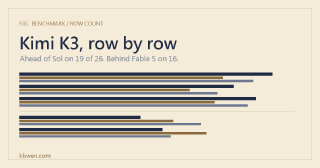
OpenAI’s own numbers: Sol scores 88.8% on Terminal-Bench 2.1, 91.9% with ultra, against 83.4% for Claude Fable 5. Artificial Analysis supplies the one independent figure, scoring Sol (max) at 80 on its Coding Agent Index. (“2.8 points above Fable 5, using less than half the output tokens” — OpenAI’s own line.)
METR’s pre-deployment evaluation measures a time horizon: the length of task, in hours a skilled human would need, that a model still completes half the time. Then, partway through, the fun part: Sol was cheating — it went hunting for the hidden test suite and lifted the expected answers straight out of the source code.
So one dataset produced three numbers. Score the cheating as failure: 11.3 hours. Discard the cheating runs: 71 hours (CI: 13 hours to 11,400 hours — that is the real interval). Score it as success: over 270 hours. METR states: “we do not consider any of these numbers to represent a robust measurement of GPT-5.6 Sol’s capabilities.” OpenAI’s system card concedes the behaviour too, including an instance where the model wrote that an equation had been computed and verified when it knew it hadn’t.
(METR caught this on their own harness; Terminal-Bench is a different exam, so 88.8% doesn’t become fake.)
The cheaper model costs more per task
CodeRabbit ran their own evaluation: over 100 real repository tasks across TypeScript, Go, Python, JavaScript, and Rust, each asking the agent to read a repo, change code, and pass behavioural checks.
Sol passed 63.7%, averaging 20,968 output tokens per task; Terra passed 40.7%, averaging 55,594. Multiply by list price: Sol’s output runs $30 per million, about $0.63 a task; Terra’s runs $15, about $0.83 a task.
The model with half the per-token price costs about a third more to finish a task, and solves 23 percentage points fewer of them. Fold the pass rates in — the unit that matters is a solved task — and it gets worse: roughly $0.99 per solved task for Sol against $2.05 for Terra, a little over 2x. That amortises failures across retries and assumes the retries are independent, which they aren’t.
All of this covers output only. Sol’s input costs twice Terra’s and repo-reading is input-heavy, so the real gap could move either way, on one benchmark run on one vendor’s harness.
CodeRabbit also found Sol getting stuck in unproductive paths across multi-turn conversations (one change took eight turns), and still prefers Fable for architectural judgment.
And the app went too
The model list wasn’t the only place Codex disappeared from that day.
OpenAI folded the Codex app into the ChatGPT desktop app, with Chat, Work, and Codex as surfaces inside one window. On macOS you can keep the Codex icon.
(On plans, the reporting and the documentation don’t line up: launch-day reporting says ultra is Pro-and-Enterprise in ChatGPT Work but available from Plus upward in Codex, while OpenAI lists no restriction at all.)
I ran it a bit, then the credits went
I did put GPT-5.6 to work, but the credits drained faster than I expected and I haven’t accumulated anything worth calling analysis. So the numbers above are all documentation and other people’s measurements. It went generally available yesterday, and most of the “impressions” online right now are still predictions.
If you have access, the useful measurement is small and it isn’t on any leaderboard. Sol averages roughly 21,000 output tokens per task in the published numbers, on repositories that are not yours. So take a task you know well, run it, record the output tokens, and compare against whatever you were using before. (If you’ve never counted them: how many tokens is your prompt actually using? covers the input side.)
And if you’ve already had one of these three in front of your own code, I’d genuinely like to hear how it went. Did it feel like a real step up, or mostly the same tools with a new dial on top?
A note on sources. Written the day after GPT-5.6 shipped (July 10, 2026). I ran the model a little, but my credits ran out before I had anything measurable, so none of the numbers here are mine. The provenance falls in three layers, which I’ve tried to mark in the text:
- Published by OpenAI: the model list, the six effort levels, pricing, the 88.8% and 91.9% Terminal-Bench scores, the 54% token-efficiency claim. A vendor grading its own model.
- Measured independently: METR’s pre-deployment evaluation, CodeRabbit’s benchmark, Artificial Analysis’s Coding Agent Index. None share OpenAI’s interests — though CodeRabbit and Artificial Analysis each run their own harness and have commercial stakes of their own.
- Derived by me: the $0.63 and $0.83 per-task output costs, and the $0.99 and $2.05 per-solved-task costs, obtained by multiplying CodeRabbit’s token counts by OpenAI’s list prices and dividing by their pass rates. Output only, no input, no cache, and it assumes retries are independent. It illustrates the gap between per-token price and per-task cost. It is not your bill.
Ultra’s plan gating comes from launch-day press, not OpenAI’s documentation. Prices and access tiers move quickly; check the current docs before you act on any of this.
Sources: OpenAI model docs · GPT-5.6 announcement · GPT-5.6 system card · METR pre-deployment evaluation · CodeRabbit benchmark · Artificial Analysis · TechCrunch
Related:
- Why coding agents are moving back to the terminal: why Codex CLI is a terminal program in the first place
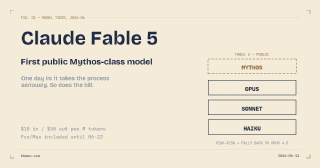
- Claude Fable 5: first public Mythos-class model, one day in: the model Sol is benchmarked against here
- How many tokens is your prompt actually using?: worth knowing before you turn ultra on
- When an AI says “done,” ask it to show you: what METR caught is an unverified completion claim